By Dr. Jerath|SEP 26TH 2026
This guide breaks down each treatment type clearly, explains what each one actually does inside your skin, and helps you figure out which approach fits your goals. If you've been comparing options and still feel unsure, that's exactly what this article is for. No jargon, no upsell, just a clear explanation of how these technologies work and when one makes more sense than another.
By the end, you'll have enough context to walk into a skin consultation and know what questions to ask.
Book a Skin Consultation at Geneva Med Spa in Alpharetta
What Are Laser Treatments?
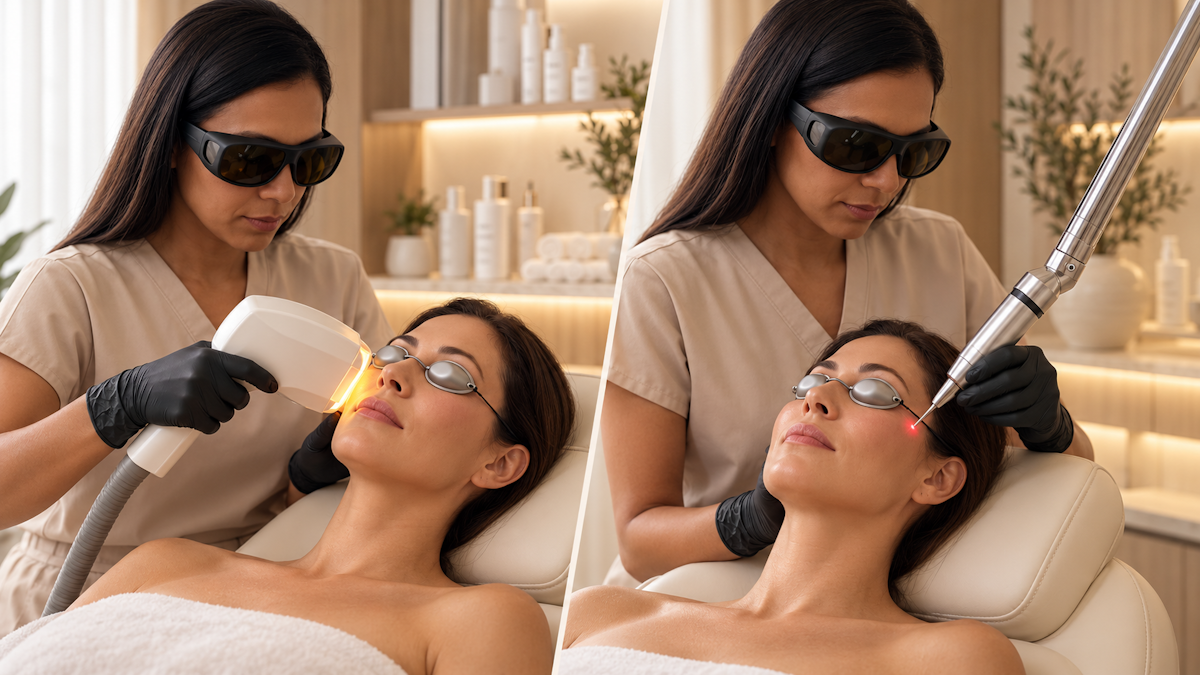
Laser treatments use focused light energy to target specific structures in your skin. The key word is "focused." A laser emits a single wavelength of light, which means the energy can be directed precisely at one type of target — a hair follicle, a pigment cluster, a layer of skin that needs remodeling.
That precision is what makes lasers so useful in medical and aesthetic settings. By controlling the wavelength, providers can choose what the light interacts with and at what depth. A laser calibrated for hair removal behaves very differently from one designed for skin resurfacing or pigmentation correction.
Common uses for laser treatments include:
- Hair removal. Laser energy targets the melanin in hair follicles, generating heat that disrupts follicle function and reduces future growth over a series of treatments.
- Pigmentation correction. Certain wavelengths break up melanin clusters responsible for dark spots, sun damage, and uneven tone.
- Wrinkle and fine line reduction. Laser energy stimulates the skin's natural collagen production, gradually improving skin firmness and smoothness.
- Skin resurfacing. More intensive laser treatments remove or remodel the outer skin layers to address texture, acne scars, and deeper lines.
Understanding this range helps clarify why "laser treatment" isn't a single thing. It's a category with many distinct tools inside it, each chosen for a specific purpose.
What Is IPL (Intense Pulsed Light)?
IPL, or intense pulsed light, is often grouped with laser treatments in conversations about light-based skin therapy, but it works on a fundamentally different principle. Where a laser emits one precise wavelength of light, IPL emits a broad spectrum of wavelengths simultaneously, more like a camera flash than a laser beam.
That broad-spectrum delivery is both IPL's strength and its limitation. Because the light covers multiple wavelengths at once, a single IPL session can address several surface-level concerns in one pass — mild redness, general skin tone irregularity, light sun damage, and scattered pigmentation. It's a good option when the goal is overall skin brightening and evening out rather than zeroing in on one specific target.
Common uses for IPL treatment include:
- Sun damage and age spots. IPL targets the melanin in superficial pigmentation, breaking up discoloration caused by UV exposure over time.
- Redness and rosacea. The light energy is absorbed by blood vessels close to the skin surface, helping reduce visible flushing and diffuse redness.
- General skin tone evening. For patients with mild, widespread discoloration rather than concentrated dark spots, IPL light-based skin treatment can provide a visible refresh with minimal downtime.
Because IPL isn't a true laser, it doesn't have the same depth of penetration or follicle-targeting precision. That means it's better suited to surface-level concerns than to deeper structural issues like scarring, significant wrinkles, or coarse hair with resistant follicles.
IPL vs Laser: What's the Difference?
Now that you understand each technology individually, here's how they compare directly across the factors that matter most for treatment outcomes.
1. Light Source
The most fundamental difference is the type of light each device uses. IPL emits broad-spectrum light across a range of wavelengths at the same time. Laser devices emit a single, controlled wavelength. That single wavelength is what gives lasers their targeting precision.
2. Precision
Because laser light is concentrated at one wavelength, providers can direct its energy very specifically. IPL's broader spectrum means the light interacts with multiple targets at once, which is useful for general improvement but limits how precisely any one concern can be addressed.
3. Treatment Depth
IPL primarily works at the skin's surface. The broad-spectrum energy doesn't penetrate deeply enough to remodel lower skin layers. Laser treatments, depending on the type, can reach significantly deeper, which is why they're used for resurfacing, collagen stimulation, and follicle destruction.
4. Best Use Cases
IPL is well suited for broad, surface-level improvements: general skin tone, mild redness, light sun damage. Lasers are the better choice for targeted concerns — just as the right tool matters in any medical treatment, the right light source matters here — hair removal, deeper pigmentation, structural texture issues, and skin resurfacing.
| Feature |
IPL |
Laser |
| Light type |
Broad-spectrum |
Single wavelength |
| Precision |
Lower |
Higher |
| Depth of penetration |
Superficial |
Superficial to deep |
| Best for |
General tone, mild redness, light sun spots |
Hair removal, pigmentation, resurfacing, scars |
| Downtime |
Minimal |
Varies by type |
Which Is Better: IPL or Laser Treatments?
Laser treatments are generally more precise and effective for targeted concerns, while IPL is better suited for broad, surface-level skin improvements. But "better" really depends on what you're trying to fix.
If you're dealing with a concentrated area of deeper pigmentation, unwanted hair growth, or skin texture that hasn't responded to topicals, a laser is almost certainly the more appropriate tool. If you're looking to refresh overall skin tone, calm mild redness, and address light sun damage across a broad area, IPL can deliver meaningful results with very little recovery time.
Skin type matters here, too. Lasers offer more adjustability for different skin tones, and some wavelengths are specifically safer for deeper complexions. IPL's broad-spectrum delivery can be less predictable on certain skin types. This is one of the reasons a proper skin evaluation by a trained provider is so important before selecting any light-based treatment — what works beautifully for one person can be the wrong call for another.
What Is Laser Skin Resurfacing?
Laser skin resurfacing is a specific category of laser treatment focused on improving skin texture, reducing the appearance of acne scars, softening fine lines, and addressing uneven tone at a structural level. It's not about targeting a single spot or follicle — it's about remodeling the skin itself.
Resurfacing lasers work by either removing the outer layers of skin entirely or triggering a controlled wound-healing response beneath the surface. In both cases, the goal is the same: stimulate your skin's natural collagen production and replace older, damaged tissue with new, healthier skin.
The results from resurfacing treatments tend to be more dramatic than what IPL or gentler laser options can achieve, and they're particularly effective for:
- Acne scarring. Resurfacing can significantly reduce the depth and visibility of pitted or rolling acne scars by breaking down the scar tissue and encouraging new collagen to fill the area.
- Fine lines and wrinkles. Especially around the eyes and mouth, where skin laxity and repeated movement create deeper creases over time.
- Skin texture irregularities. Rough patches, enlarged pores, and uneven surface texture respond well to resurfacing because the treatment targets the structural layer where these issues originate.
If you've explored microneedling or chemical peels for similar concerns, resurfacing lasers occupy similar territory but typically offer more controlled depth and longer-lasting outcomes.
Ablative vs Non-Ablative Laser Treatments
Within the category of laser skin resurfacing, there are two major approaches: ablative and non-ablative. Understanding the difference helps set realistic expectations about results and recovery.
Ablative Lasers
Ablative laser treatments physically remove the outer layers of skin. The laser vaporizes the surface tissue in a controlled way, which triggers a robust healing response. As the skin repairs itself, it produces new collagen and replaces the removed layer with fresher, smoother skin.
The results from ablative treatments tend to be more dramatic because the intervention goes deeper. The tradeoff is downtime — patients typically experience redness, peeling, and sensitivity for days to weeks after an ablative session. This type of treatment is best suited for patients with significant texture concerns, deeper scars, or more pronounced wrinkles who are willing to plan for recovery time.
Non-Ablative Lasers
Non-ablative laser treatments work beneath the skin surface without removing the outer layer. The laser energy passes through the skin and heats the deeper layers, stimulating collagen production without breaking the surface.
Because the outer skin remains intact, recovery is minimal — most patients return to normal activity the same day or the next. Results from non-ablative treatments build gradually over weeks to months as the new collagen develops. The improvement is real, but typically more subtle than what ablative treatments can achieve.
For patients looking to improve overall skin quality, reduce mild to moderate lines, and maintain a consistent routine without planned downtime, non-ablative laser treatments are often the preferred starting point.
Which Laser Treatment Is Right for You?
The right treatment comes down to matching the technology to your specific concern, your skin type, and your tolerance for downtime. Here's a quick breakdown by goal:
- Unwanted hair. Laser hair removal is the clear choice. IPL can reduce hair growth, but laser treatments target follicles with significantly more precision, which translates to better long-term results.
- Dark spots and sun damage. Mild, surface-level discoloration may respond well to IPL. More concentrated or deeper pigmentation generally needs a targeted laser treatment for reliable correction.
- Fine lines and wrinkles. Non-ablative laser treatments are a good starting point. For deeper lines or more pronounced aging, ablative resurfacing may be the more effective option.
- Acne scars and skin texture. Resurfacing treatments — ablative or non-ablative depending on severity — are specifically designed for this concern. This is where laser treatments significantly outperform IPL.
- General skin tone and mild redness. IPL often makes the most sense here. It addresses multiple surface-level concerns in one session with minimal disruption to your schedule.
No single technology is universally superior. The best outcomes come from matching the right tool to the right problem on the right skin. This is why an honest, thorough skin evaluation matters before committing to any treatment plan.
Can IPL Replace Laser Treatments?
IPL cannot fully replace laser treatments because it lacks the same level of precision and depth, but it can be genuinely effective for mild skin concerns where a focused laser would be excessive.
Think of it this way: if your goal is a general brightening, calming redness, and addressing light sun damage across a large area, IPL is a practical, low-downtime solution. If your goal is eliminating a concentrated dark spot, reducing a visible acne scar, or achieving lasting hair removal, IPL isn't going to deliver the same results as a laser treatment designed for that purpose.
The two technologies aren't in competition. They serve different roles and, in some cases, can complement each other in a broader skin treatment plan. What matters is having a provider who understands the difference and helps you select the right approach for what you're actually trying to accomplish, rather than defaulting to whatever treatment is easiest to offer.
Are Laser Treatments Safer Than IPL?
Both laser and IPL treatments have strong safety profiles when administered correctly. The technology itself isn't what makes a treatment safe or risky — it's the combination of device selection, provider expertise, and how well the treatment is matched to the patient's skin type.
That said, a few distinctions are worth knowing:
- Skin type considerations. Certain laser wavelengths are specifically engineered to be safer across a range of skin tones. IPL's broad-spectrum output can be less predictable on darker complexions, increasing the risk of hyperpigmentation if settings aren't calibrated carefully for the individual patient.
- Depth and intensity. Ablative laser treatments carry more recovery-related effects (redness, peeling, temporary sensitivity) than IPL, but those effects are expected and manageable when the treatment is performed correctly.
- Provider expertise is the deciding factor. A skilled provider using the right device at the right settings for your skin is far safer than any specific technology administered without proper evaluation. This is one of the clearest reasons to choose a physician-led practice over a discount treatment center for any light-based skin procedure.
Why Treatment Selection Matters More Than Technology Alone
One pattern comes up consistently in aesthetic medicine: patients who are disappointed with their results weren't always treated with bad technology — they were treated with the wrong technology for their specific concern.
A high-end IPL device can't fix a deep acne scar. A resurfacing laser isn't the right first step for someone with mild, surface-level redness. And even the most precise laser won't produce good outcomes if the provider doesn't evaluate your skin type, understand your goals, and design a treatment plan around both.
This is where the clinical approach matters. At Geneva Med Spa, every skin treatment starts with a real conversation about your concerns, a thorough evaluation, and a clear explanation of what each option can realistically achieve for you. The goal is never to recommend the most impressive-sounding technology — it's to find the approach that actually fits your skin and your life.
If you've been reading about Botox, dermal fillers, or neurotoxins alongside laser and IPL options, a consultation is the most efficient way to understand how these treatments fit together in an overall plan. Most patients benefit from a combination approach rather than a single solution.
Why Patients Choose Geneva Med Spa for Skin Treatments
Geneva Primary Care and Med Spa is a physician-led clinic in Alpharetta, Georgia. That distinction matters when you're considering any treatment that uses light or energy on your skin. Everything at Geneva starts with medical-grade clinical evaluation, not a sales script.
What that looks like in practice:
- Medical-grade technology with clinical oversight. Treatment decisions are made by providers with real clinical training, not aestheticians working from a menu.
- Customized selection based on your skin and goals. There's no one-size-fits-all approach. Your skin type, concern, and desired outcome all factor into the recommendation.
- A focus on safe, natural-looking results. The goal is skin that looks healthy and refreshed, not treated. That requires choosing the right intervention and the right intensity for you specifically.
- Primary care context when it matters. Because Geneva is also a primary care practice, providers can consider your overall health history alongside your aesthetic goals, something most standalone med spas can't offer.
Whether you're exploring your options for the first time or you've had treatments elsewhere and want a more personalized approach, the conversation starts with a consultation.
Book Your Skin Consultation at Geneva Med Spa in Alpharetta
Frequently Asked Questions
Is IPL the same as laser treatment
IPL is not the same as laser treatment, even though both use light energy and are often grouped together in discussions about skin care. The core difference is the type of light each device emits. Laser treatments use a single, focused wavelength, which allows the energy to target a specific structure in the skin precisely — whether that's a hair follicle, a pigment cluster, or a skin layer. IPL uses broad-spectrum light across a range of wavelengths simultaneously, which is better suited for general, surface-level improvements rather than targeted correction. They can sometimes address overlapping concerns, but they are distinct technologies with different strengths.
Which is better, IPL or laser treatments
Neither is universally better — the right choice depends entirely on what you're trying to treat. Laser treatments are generally the stronger option for targeted concerns like hair removal, concentrated dark spots, acne scars, and skin resurfacing because of their precision and depth. IPL tends to perform better when the goal is broader skin tone improvement, mild redness reduction, and light surface-level sun damage across a large area. A provider who evaluates your specific concern and skin type will be able to give you a clear recommendation rather than defaulting to one technology over the other.
What type of laser treatment is best for skin
The best type of laser treatment depends on your specific skin concern. Laser hair removal is optimized for targeting and disabling hair follicles. Non-ablative lasers are a good starting point for fine lines, general skin quality, and collagen stimulation with minimal downtime. Ablative resurfacing lasers offer more dramatic improvements for significant acne scars, deeper wrinkles, and pronounced texture irregularities, but they come with a longer recovery period. A skin consultation that includes an honest assessment of your goals and skin type is the most reliable way to identify which type fits your situation.
Can IPL remove hair like laser hair removal
IPL can reduce hair growth, and it is sometimes marketed for hair removal, but it is generally less effective than true laser hair removal. Laser devices emit a focused wavelength that targets the melanin in hair follicles with a high degree of precision, generating enough heat to disrupt the follicle and reduce future growth reliably. IPL's broad-spectrum output is less concentrated, which means it interacts with hair follicles less specifically. Patients seeking meaningful, lasting hair reduction will typically achieve better results with laser hair removal than with IPL treatments.
What is the difference between ablative and non-ablative lasers
Ablative lasers remove the outer layers of the skin through a controlled vaporization process, triggering a strong healing response that produces new collagen and replaces the treated surface with fresher skin. The results tend to be more dramatic, but recovery involves several days to weeks of redness, peeling, and sensitivity. Non-ablative lasers work by passing energy through the outer skin layer without removing it, heating the deeper layers to stimulate collagen production from beneath. Recovery is much shorter, often a day or less, though results develop more gradually and are generally more subtle. The best choice between the two depends on the severity of your concern and how much downtime you can plan for.
How many treatments are typically needed for laser or IPL results
The number of sessions varies by treatment type and individual skin response. Laser hair removal typically requires six to eight sessions spaced several weeks apart to catch hair follicles across different growth cycles. IPL treatments for pigmentation or redness often show meaningful improvement after three to five sessions, though some patients benefit from maintenance treatments. Resurfacing treatments may achieve significant results in one to three sessions depending on the severity of the concern and whether ablative or non-ablative methods are used. Your provider will outline a realistic treatment schedule during your initial consultation based on your specific goals.
Is there downtime after IPL or laser treatments
Downtime varies considerably by treatment type. IPL and non-ablative laser treatments typically involve minimal recovery — some redness, light sensitivity, or mild swelling that resolves within a day or two, and most patients return to normal activity immediately. Ablative laser resurfacing requires more planned recovery time, often a week or more depending on the treatment intensity, during which the skin will peel, be sensitive, and need careful protection from sun exposure. Understanding the recovery expectations before committing to a treatment is important, and a good provider will walk you through exactly what to expect for your specific procedure.
Ready to Find the Right Treatment for Your Skin?
Understanding the difference between IPL and laser treatments is the first step toward choosing the right approach for your skin — but the real clarity comes from a conversation with a provider who can evaluate what you're working with.
At Geneva Primary Care and Med Spa, every skin treatment starts with a thorough evaluation and an honest conversation about what each option can realistically deliver for your specific concern. Whether you're weighing IPL against laser for sun damage, exploring resurfacing for scars, or simply trying to figure out where to start, the consultation is where the guesswork ends.
Geneva is a physician-led practice in Alpharetta, Georgia, offering aesthetic and skin rejuvenation services alongside comprehensive primary care. That combination means your aesthetic goals are always considered in the context of your overall health, which leads to better outcomes and safer treatments.
Geneva Primary Care and Med Spa
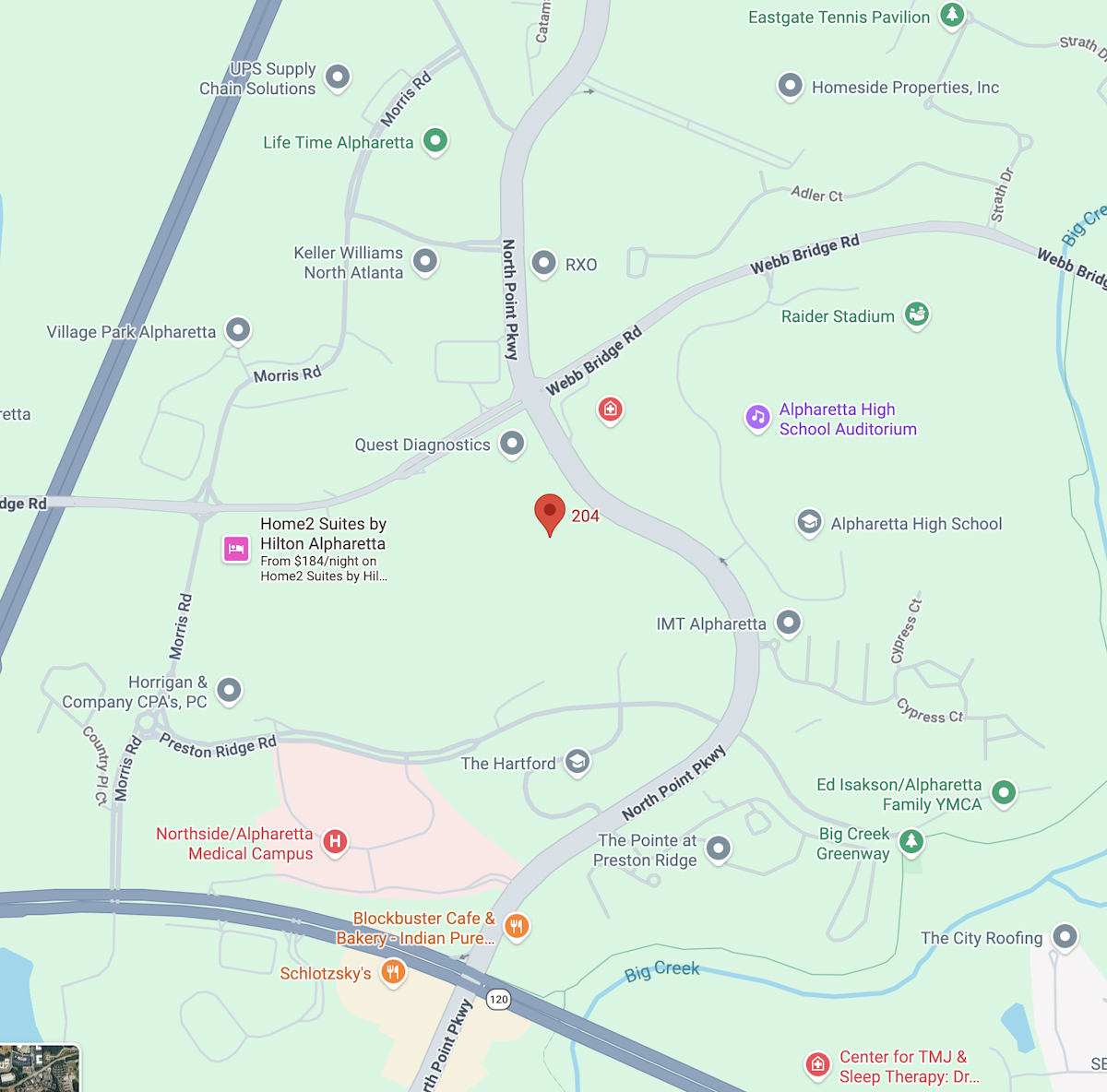
3275 North Point Parkway Suite 204
Alpharetta, GA 30005
Phone (470) 704-9687
Schedule Your Skin Consultation at Geneva Med Spa