By Dr. Jerath|OCT 6TH 2026
Weight Loss Can Include Both Fat Mass and Lean Mass
When your body weight drops, it drops from several compartments at once: fat mass, lean tissue, body water, and the water stored along with carbohydrate (glycogen). Lean body mass is not the same thing as muscle. It includes organs, connective tissue, and body water, which is why a scan can show a few pounds of "lean mass" change that is not all skeletal muscle.
The numbers from research are more reassuring than the headlines. In the body-scan substudy of the large tirzepatide obesity trial, about 75% of the weight lost was fat mass and about 25% was lean mass, and that ratio was essentially the same in the placebo group, who lost less weight without the medication. Other medications show different numbers: registration trials have reported lean mass accounting for up to 40% of total weight lost with semaglutide and up to 60% with liraglutide. A 2025 pooled analysis of GLP-1 trials found an average lean mass reduction of about 1.7 kg (roughly 3.7 pounds), with wide variation between studies and drugs.
Muscle Loss Is Not Unique to GLP-1 Treatment
Lean-mass loss shows up in calorie-restricted dieting, after bariatric surgery, during illness, with prolonged bed rest, and with age-related weight loss. It is a feature of losing a lot of weight, not a toxicity specific to GLP-1 medications. The goal is not to prevent every ounce of lean-mass change, which is not realistic during major weight reduction, but to keep as much functional skeletal muscle as you reasonably can while the fat comes off.
Why Preserving Muscle Matters During Medical Weight Loss
Muscle carries you up stairs, keeps your balance steady, protects your independence as you age, and acts as the body's largest site for using blood glucose. Lose too much of it and you can end up lighter but weaker, with less exercise capacity and a harder time holding your new weight.
Body Composition Matters More Than Scale Weight Alone
Two people can each lose 30 pounds and end up in very different places. One loses mostly fat, keeps their strength, and sees their waist and metabolic markers improve. The other gives up more lean tissue and notices groceries feel heavier than they used to. Same scale result, different outcome, which is why we look at more than the number on the scale when reviewing progress.
Preserving Muscle Becomes More Important With Age
Muscle mass and strength naturally decline with age, a process called sarcopenia. Someone in their sixties or seventies often starts with less muscle in reserve and may respond less efficiently to protein and training. Since GLP-1 therapies can produce weight loss in the range of 15% to 25% of body weight over a year or two, researchers have specifically flagged older adults for closer attention to muscle and physical function. That is an argument for monitoring, not an argument against treatment.
Why GLP-1 Muscle Loss Can Happen During Treatment
These medications work in large part by changing appetite and satiety, so you feel full sooner and stay full longer. That is the point. The trouble starts when "less hungry" quietly becomes "barely eating." If total calories and protein both fall off a cliff, the body has less raw material to maintain tissue it is not actively using.
Faster Weight Loss Raises the Stakes
Losing weight quickly does not automatically mean muscle wasting, but it does narrow the margin for error. The larger your energy deficit, the more your protein intake, strength training, sleep, and recovery have to carry the load. If your weekly loss is outpacing what your expected treatment timeline would predict, that is worth a conversation rather than a celebration.
Inactivity Removes the Muscle-Building Signal
Muscle is expensive tissue to maintain. When you eat less, lose weight, and move less all at the same time, your body has little reason to hold onto it. Many people become less active during rapid weight loss simply because energy is lower, which quietly compounds the problem.
Side Effects Can Get in the Way of Nutrition
Nausea, early fullness, food aversions, and digestive changes can make protein-rich meals unappealing exactly when you need them most. That is worth addressing directly, because managing side effects is often what makes adequate intake possible again.
Protein Gives Your Body the Raw Material to Maintain Muscle
Dietary protein supplies amino acids, the building blocks your body uses for muscle protein turnover: the constant process of breaking down and rebuilding muscle tissue. During a calorie deficit, that rebuilding side needs support. Protein also helps with recovery after strength training and tends to be the most filling macronutrient.
Protein Needs Should Be Individualized
There is no single gram target that fits everyone. Appropriate protein intake depends on your body size, age, activity level, whether you are lifting, how large your calorie deficit is, your kidney function, and your overall medical history. More is not automatically better, and some conditions call for a more careful approach. This is one of the first things we work through at a weight-loss consultation.
Spread Protein Across the Day
When appetite is low, cramming most of your protein into dinner rarely works. A protein source at breakfast, lunch, dinner, and a snack or two is easier to tolerate and gives your body a steadier supply. Options that go down well when appetite is limited include Greek yogurt, cottage cheese, eggs, poultry, fish, lean meats, tofu, legumes, and, when food alone is not getting you there, a protein shake chosen with your clinician. For how to build these into actual meals, see our guide on what to eat on GLP-1 medications.
Strength Training Tells Your Body to Keep the Muscle
Protein supplies the materials. Resistance training supplies the reason. Loading a muscle against resistance signals that the tissue is still needed, which is why nutrition and training together do more for muscle preservation than either one alone. Researchers take this seriously enough that there are now clinical trials specifically testing resistance exercise as a way to limit lean-mass loss during GLP-1 therapy.
This Does Not Mean Bodybuilding
Resistance training can look like bodyweight squats and push-ups against a counter, resistance bands, weight machines, dumbbells at home, or supervised functional training. What matters is progressive challenge: over time, a little more weight, a few more repetitions, or better control. Many people starting medical weight loss are deconditioned or managing joint pain, and two or three sessions a week that you actually do beat an ambitious program that ends in an injury. If you have cardiac concerns, balance issues, or significant mobility limits, get specific clearance first.
Walking and Cardio Still Matter
Cardiovascular activity supports heart health, endurance, daily energy expenditure, and mood, and walking is one of the easiest habits to keep during weight loss. It just does not send the same muscle-maintenance signal that resistance work does.
Body Composition Tells You More Than the Scale
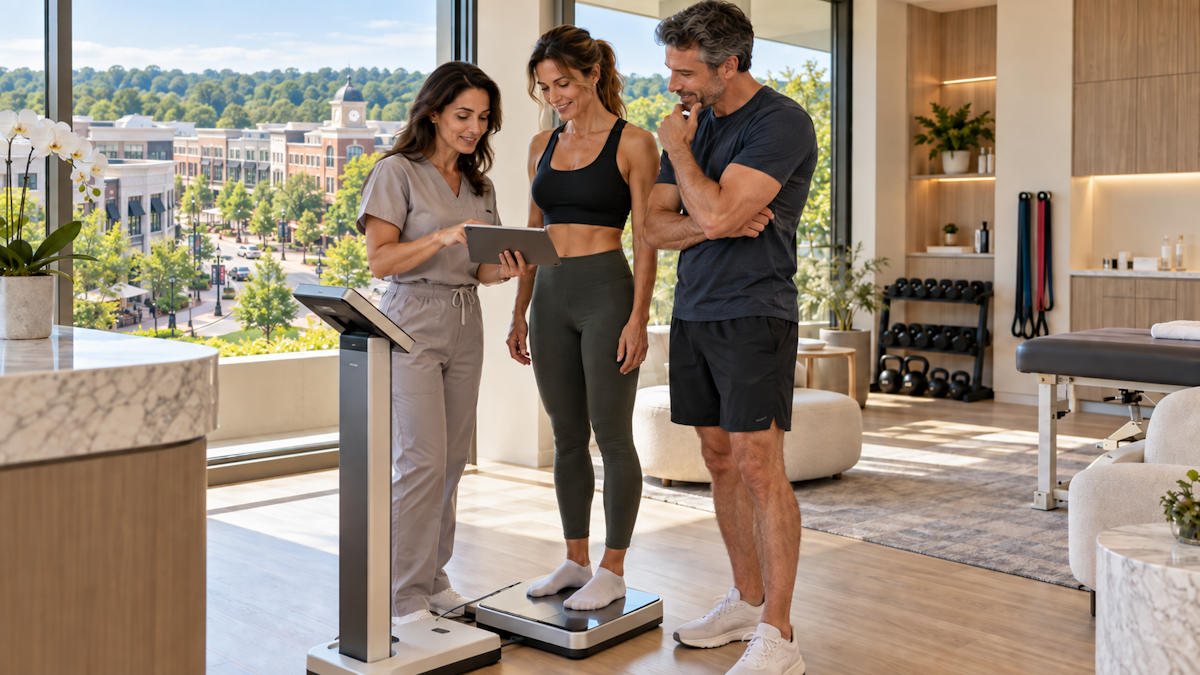
Body composition describes what your weight is made of: fat mass, lean mass, skeletal muscle, and body water. Scale weight alone cannot tell you which of those went down, and BMI cannot distinguish muscle from fat at all. Common measurement options include bioelectrical impedance analysis (BIA), which sends a small current through the body to estimate tissue compartments, DEXA scanning where clinically appropriate, waist circumference, and simple strength tracking. No method is perfectly precise, and BIA readings shift with hydration, food, and time of day, so trends over weeks matter far more than a single reading.
Functional Progress Counts
Some of the most meaningful signs are not on any printout. Can you carry groceries without setting them down? Get off the floor easily? Lift the same weight you did two months ago? If strength and daily function are holding or improving while your waist shrinks, your weight loss is going the right direction.
Who Should Pay Extra Attention to Muscle Preservation
Everyone benefits from protein and strength work, but a few groups deserve closer monitoring: older adults, people who start with relatively low muscle mass alongside higher body fat, anyone losing weight unusually fast, people who are very sedentary, and those struggling with persistent nausea or very low intake. None of this means medication is off the table. It means the plan around the medication needs to be more deliberate, which may include adjusting the dose or pace of loss rather than pushing through.
A Better Way to Think About Weight-Loss Success
The best outcome is not the fastest or largest drop on the scale. A better goal is meaningful fat loss while maintaining adequate nutrition, strength, muscle, and metabolic health.
| Instead of focusing only on |
Also monitor |
| Pounds lost |
Fat mass versus lean mass trend |
| Weekly scale change |
Waist and body-composition changes |
| Eating as little as possible |
Adequate calories and protein |
| Calories burned in cardio |
Resistance training and strength gains |
| Short-term loss |
Long-term maintenance and physical function |
How Geneva Med Approaches Muscle Preservation During Weight Loss
Medically supervised weight loss involves more than refilling a prescription. Depending on what your case calls for, follow-up can include treatment response, the rate of weight loss, protein and dietary intake, side effects, strength training, body-composition and waist measurements, and labs where clinically appropriate, plus a plan for maintaining results later. Medication choice matters too, since different agents behave differently, and insulin resistance can shape which approach fits you best. Not every patient needs every test; the point is that someone is watching more than your dose.
Geneva Med provides physician-guided medical weight loss in Alpharetta for patients from Alpharetta, Johns Creek, Milton, and communities throughout North Atlanta.
Lose Fat Without Losing Strength
Avoiding unnecessary GLP-1 muscle loss comes down to a few unglamorous things done consistently: eat enough, prioritize protein, train your muscles, keep the pace of loss reasonable, and measure more than pounds. If you would like that managed by a physician-led team rather than figured out alone, book a weight-loss consultation with Geneva Med. Call (470) 704-9687 or visit us at 3275 North Point Pkwy Suite 204, Alpharetta, GA 30005.
Frequently Asked Questions About GLP-1 Medications and Muscle Loss
Do GLP-1 medications cause muscle loss?
Significant weight loss includes some lean-mass loss regardless of how it is achieved, including through dieting and surgery. In the tirzepatide body-scan substudy, about a quarter of the weight lost was lean mass, a ratio that matched the placebo group. GLP-1 treatment should be paired with adequate protein, enough total nutrition, resistance training, and regular monitoring so more of the loss comes from fat.
Does semaglutide cause muscle loss?
Semaglutide-assisted weight loss, like other substantial weight loss, can involve a reduction in lean mass, with trial data reporting lean mass accounting for up to 40% of total weight lost in some analyses. That is not evidence that semaglutide uniquely destroys muscle. Protein intake, strength training, and the pace of weight loss all influence the outcome, which is why monitoring matters during a typical semaglutide timeline.
Does tirzepatide cause muscle loss?
Tirzepatide, a dual GIP and GLP-1 receptor agonist, produces substantial weight loss, and some of that loss is lean mass. In its large obesity trial, roughly 75% of weight lost was fat and roughly 25% was lean mass, similar to the placebo group. The same strategies apply: adequate protein, resistance training, sufficient calories, and tracking body composition rather than scale weight alone.
How much protein should I eat while taking a GLP-1?
There is no single protein target that fits everyone. Appropriate intake depends on your body size, age, activity level, whether you do resistance training, the size of your calorie deficit, kidney function, and other medical conditions. Many people losing weight intentionally benefit from prioritizing protein at each meal, but the specific amount should be set with your clinician rather than copied from a general recommendation.
Should I lift weights while taking a GLP-1 medication?
Resistance exercise provides the signal that tells your body to hold onto muscle while you lose fat, so some form of strength work is generally valuable during treatment. The right program depends on your fitness level, joint health, age, balance, cardiovascular status, and medical history. Bodyweight exercises, resistance bands, machines, or free weights can all work if the challenge progresses gradually and safely.
How do I know if I am losing muscle instead of fat?
Scale weight cannot tell the difference. Useful signals include body-composition measurements such as bioelectrical impedance or DEXA, waist circumference trends, and whether your strength and daily function are holding steady. Losing strength, feeling noticeably weaker during routine tasks, or seeing lean mass trend down across several measurements is worth reviewing with your clinician, who can adjust nutrition, training, or the pace of weight loss.
Can I build muscle while losing weight on a GLP-1?
Building significant new muscle is harder during a calorie deficit, but maintaining lean mass and gaining strength are often realistic goals. People new to resistance training, those with lower baseline muscle, and anyone meeting their protein needs tend to do best. Training history, age, protein intake, sleep, and individual physiology all influence the result, so expectations should be set individually.