By Dr. Jerath|OCT 2ND 2026
Why Acne Scars Are Not All the Same
Acne scars form when inflammation damages the skin and healing does not restore it evenly. How a scar turns out depends on how deep the inflammation went and whether collagen was lost or overproduced.
Atrophic (depressed) scars sit below the surrounding skin because collagen was lost during healing. They are the most common type after acne, they are usually sorted into boxcar, rolling, and ice-pick scars, and they are the focus of this article. Hypertrophic and keloid scars are the opposite problem: the skin made too much scar tissue, so the scar sits above the surface, which puts it in a different treatment category.
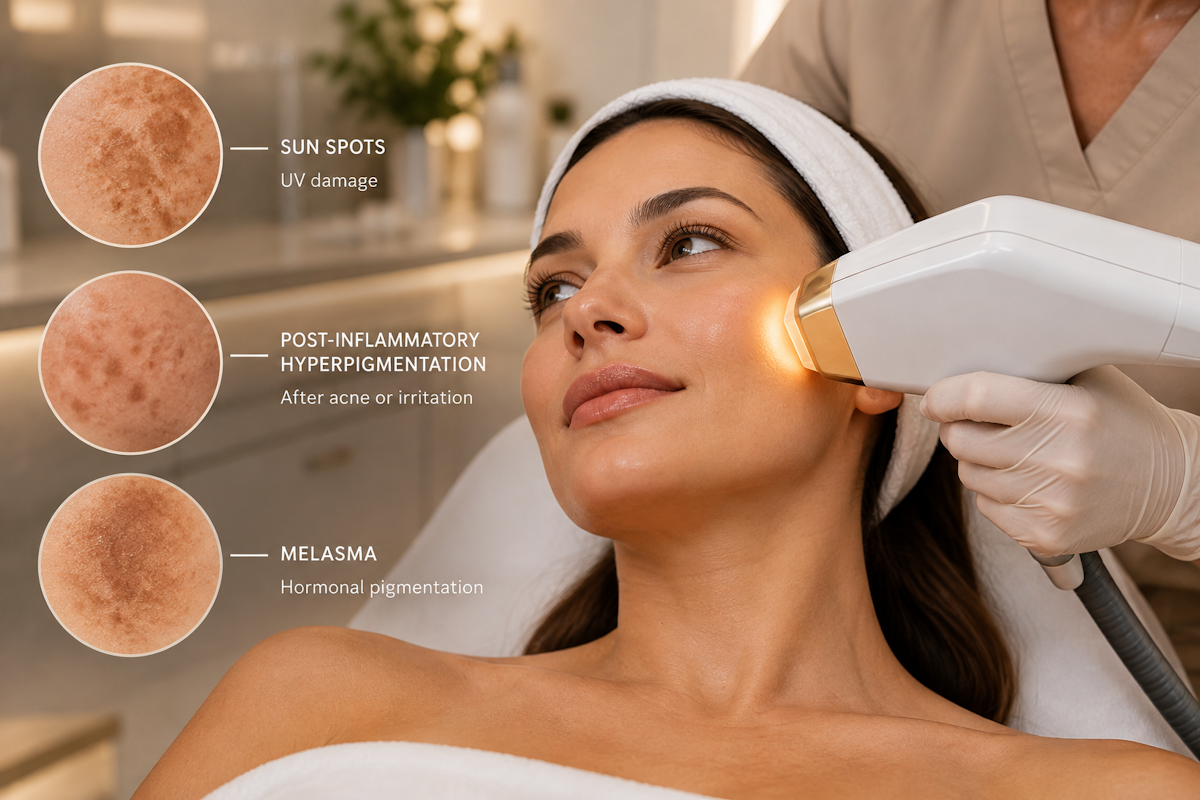
Then there are flat marks. Brown spots (post-inflammatory hyperpigmentation) and pink or red patches (post-inflammatory erythema) left after a breakout are color changes, not pits; run a finger over them and the skin feels smooth. Many people searching for acne scar treatment actually have these, and pigmentation-focused treatment is usually the better conversation. So the real question is not whether CO2 laser works on acne scars as a group, but whether the structure of your particular scars suits resurfacing.
How Fractional CO2 Laser Improves Depressed Acne Scars
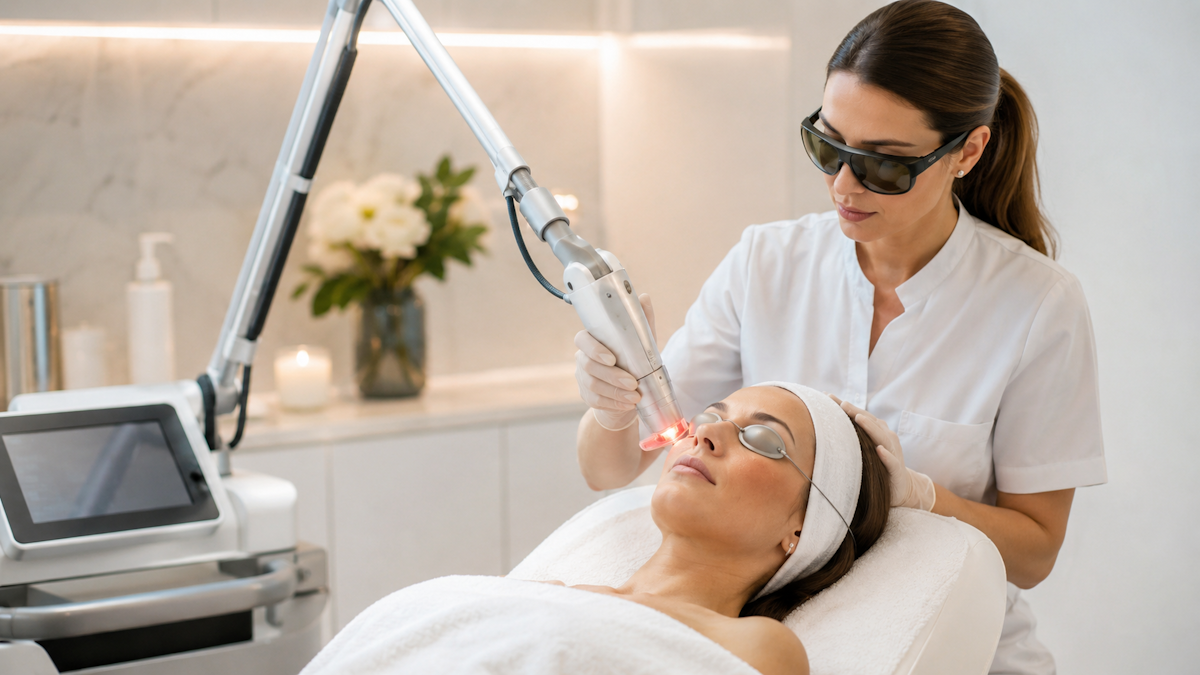
Fractional CO2 is an ablative laser, meaning it removes a thin layer of damaged skin. "Fractional" means it does this in a pattern of microscopic columns rather than across the whole surface, leaving untreated skin in between to speed healing. Geneva Med delivers fractional CO2 resurfacing through the HELIX by Cartessa platform.
Two things happen at once: the laser resurfaces the uneven top layer, and the controlled injury below triggers a wound-healing response. The American Academy of Dermatology explains that as skin heals after laser resurfacing it produces collagen and elastin, which can diminish the appearance of scars, and that a laser may also be used to contour the skin around a scar. That matters because atrophic scars are a structural problem below the surface, not just a rough top layer. Rebuilding collagen in and around the depression is what can make the scar floor sit closer to the surrounding skin and the edges blend in.
The goal is improvement, not erasure: reduced scar depth, softer edges, smoother texture, and scars that catch the light less harshly. In one review of 121 people treated with fractional CO2 for atrophic acne scars, the treatment was effective without serious adverse reactions, with scar type and laser energy standing out as the factors that influenced how well people did.
Which Acne Scar Types Respond Best to CO2 Laser
Fractional CO2 resurfacing suits depressed scars where edges and uneven texture can be remodeled, particularly boxcar scars and many rolling scars. Deep ice-pick scars are more structurally difficult and often need a different or combined approach.
Boxcar Scars
Boxcar scars are round or oval depressions with defined, steep edges, like a shallow crater, and they are common on the cheeks and temples. They are often strong resurfacing candidates because much of what makes them visible is that hard edge where normal skin drops into the depression: resurfacing can soften that transition while new collagen builds in the floor of the scar. Depth, width, edge sharpness, and how densely packed the scars are all influence how much change one treatment can produce.
Rolling Scars
Rolling scars are broader and shallower, with gently sloping sides that give the cheek a wavy look, especially in side lighting. Because they are a texture problem across a wider area, they often respond nicely to the combination of surface resurfacing and collagen stimulation. The nuance is tethering: some rolling scars are pulled downward by fibrous bands attaching the skin to deeper tissue, so a strongly tethered scar may need combination treatment to get the depression itself to lift.
Ice-Pick Scars
Ice-pick scars have a narrow opening but a track that extends farther down into the skin, often deeper than they look from above. They tend to show up around the nose, inner cheeks, and temples. Broad surface resurfacing reaches the top of that track more easily than the bottom, so deep ice-pick scars are often less responsive to fractional resurfacing on its own. Shallower ice-pick scars and the texture around them can still improve.
Raised Scars and Flat Marks
Hypertrophic and keloid scars are excess tissue rather than lost tissue, so they need a strategy built for raised scars and a careful conversation about risk. Discoloration that is level with the rest of your skin is a pigment or redness issue and responds to treatment aimed at hyperpigmentation rather than textural resurfacing.
| Scar type |
Typical structure |
Fractional CO2 fit |
Important consideration |
| Boxcar |
Depressed with defined edges |
Often a strong candidate |
Depth and edge definition matter |
| Rolling |
Broad, shallow, sloping |
Often appropriate |
Tethering can limit response |
| Ice-pick |
Narrow and deep |
More limited on its own |
May need another or combined approach |
| Raised |
Excess scar tissue |
Different category |
Needs raised-scar specific treatment |
| Flat red or brown marks |
Color change, no depression |
Not a textural scar |
Pigment or redness treatment fits better |
Why Some Acne Scars Respond Better Than Others
Beyond scar shape, three things drive the result. Depth matters, because a shallow irregularity is more accessible to resurfacing than a scar that tunnels deep. Edge shape matters, because much of what your eye registers as a scar is the shadow at its rim. And tethering matters: scars anchored to deeper tissue behave like a button sewn into fabric, and remodeling the surface is not the same as releasing that attachment, which is why two scars that look alike can improve by different amounts. Most people also carry a mix of scar types on a single cheek, so a thoughtful plan may treat different areas differently.
What Else Determines Whether CO2 Laser Is Right for Your Acne Scars
Skin Tone and Pigment Risk
Melanin-rich skin can react to the inflammation of a laser with temporary darkening. Clinical reviews note that ablative CO2 treatment carries a higher risk of pigment changes in deeper skin tones, which does not rule out treatment but does change settings, preparation, and sometimes the choice of device.
Active Acne and Past Treatments
Scar treatment works best once breakouts are under control, since treating active inflammatory acne raises the risk of infection or poor healing. Past laser resurfacing, microneedling, or chemical peels also tell your provider how your skin tends to respond.
Recovery Tolerance and Goals
More intensive resurfacing means more visible healing time, with swelling, peeling, and redness before the glow. If you have a wedding or a work trip coming up, timing matters, and the CO2 laser recovery timeline is worth reading before you book. The honest aim is meaningful improvement in scar depth, texture, and visibility, not completely scar-free skin.
CO2 Laser vs Microneedling for Acne Scars
Fractional CO2 is ablative resurfacing: it removes tissue and is the more intensive option, which can suit established textural scarring but comes with more recovery. Microneedling uses fine needles to create controlled micro-injury that stimulates collagen without removing the surface layer, so the downtime is different.
Neither is automatically better. The right pick comes down to your scar type and depth, your skin, your goals, and how much recovery you can realistically take, and some plans combine both over time. If you are comparing devices, our overview of how laser skin treatments work is a good starting point, and your acne scar consultation is where the decision gets made.
How Many CO2 Laser Sessions You May Need
There is no universal number. It depends on how severe and dense the scarring is, which scar types you have, the intensity used, how your skin responded to the first session, and whether other treatments are layered in. The AAD notes that some lasers require more sessions than others, and deeper scarring takes more patience than a single appointment.
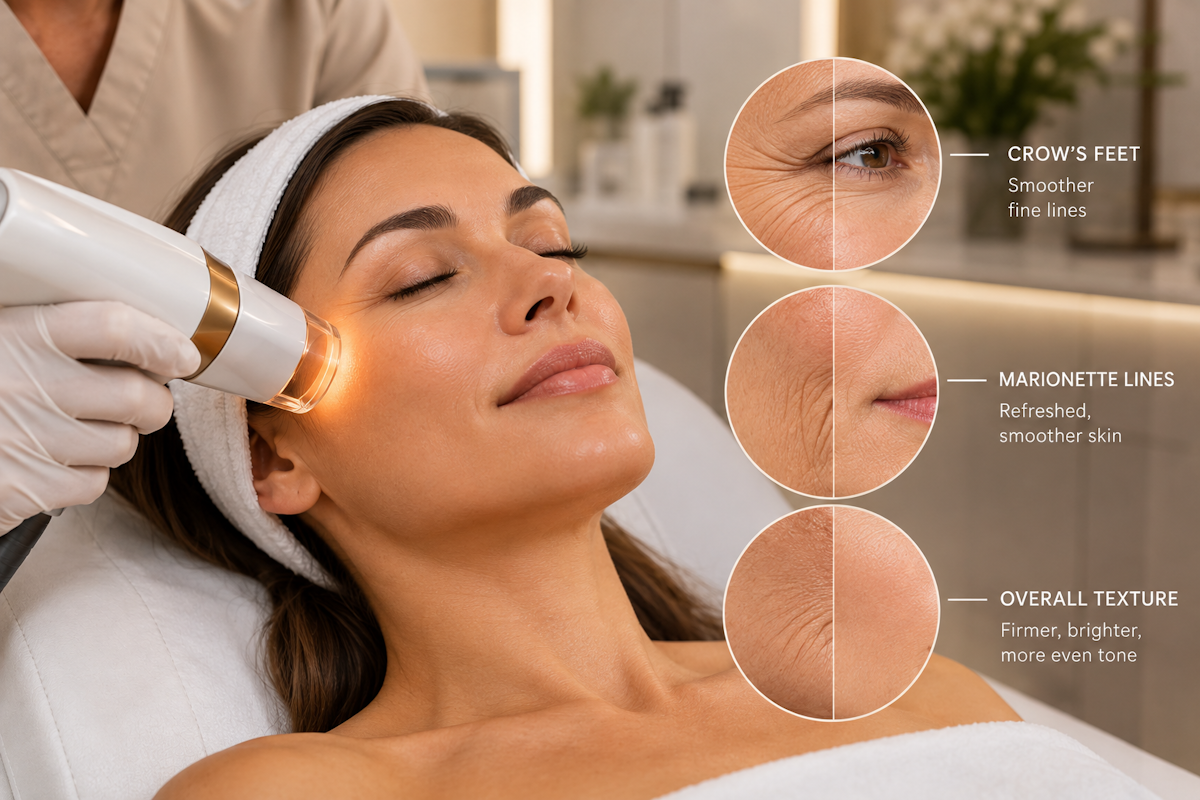
Two timelines run after treatment. Surface recovery comes first, as swelling, peeling, and redness resolve; collagen remodeling keeps working underneath for weeks to months, so healed skin is not the final result. What laser skin resurfacing aims for is reduced scar depth, softer edges, smoother texture, and scars that are harder to notice, and results vary from person to person.
Acne Scar Treatment at Geneva Med in Alpharetta
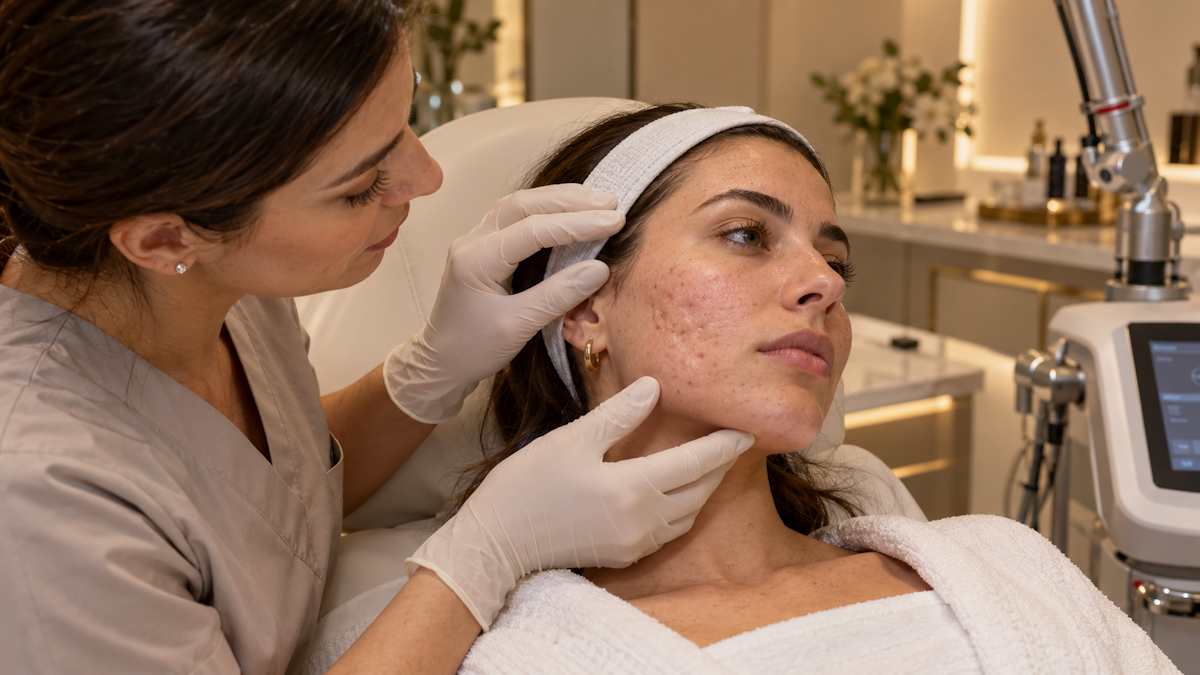
A useful consultation starts with mapping what is on your face: scar shapes, depth, any tethering, whether acne is still active, pigment concerns, your skin tone and procedure history, and how much downtime you can take. Only then does the device enter the conversation, whether that is fractional CO2, microneedling, a pigment-focused treatment, or a combination over time.
Deciding on CO2 laser for acne scars is easier once you know which of your scars are boxcar, which are rolling, which run deeper, and which are not scars at all. Our physician-led team sees patients from Alpharetta, Johns Creek, Milton, and throughout Greater Atlanta. Call (470) 704-9687, visit us at 3275 North Point Pkwy Suite 204, Alpharetta, GA 30005, or book an acne scar consultation to get started.
FAQs
Does CO2 laser work for acne scars?
Fractional CO2 laser can improve many depressed, textural acne scars by resurfacing damaged tissue and stimulating collagen remodeling underneath. How well it works varies with scar type, scar depth, skin characteristics, and the overall treatment plan. It is not a single fix for every acne scar, and results differ from person to person, which is why scars should be evaluated individually before treatment is chosen.
Which acne scars respond best to CO2 laser?
Boxcar scars and many rolling scars are often the strongest candidates for fractional CO2 resurfacing. Boxcar scars have defined edges that can be softened, and rolling scars involve broad surface unevenness that resurfacing and new collagen can smooth. Even within those categories, depth, width, scar density, and underlying tethering affect how much improvement is realistic.
Does CO2 laser work for ice pick scars?
Deep ice-pick scars are more challenging because the narrow track extends farther into the skin than broad surface resurfacing easily reaches. They may be less responsive to fractional CO2 as a stand-alone treatment and often do better with another technique or a combined plan. Shallower ice-pick scars and the surrounding texture can still improve with resurfacing.
Can CO2 laser improve rolling acne scars?
Many rolling scars improve with fractional CO2 because the treatment smooths uneven transitions and builds collagen across a broad area. The main variable is tethering, where fibrous attachments pull the skin downward from below. A strongly tethered scar may look better in texture while the depression itself persists, so combination treatment is sometimes discussed.
Can CO2 laser completely remove acne scars?
No. Fractional CO2 resurfacing aims to reduce scar depth, soften scar edges, improve texture, and make scars less noticeable, not to restore completely scar-free skin. Improvement usually builds across more than one treatment and continues as collagen remodels over the following months. Any provider promising full scar removal is overpromising.
Are dark acne marks the same as acne scars?
No. Flat brown spots (post-inflammatory hyperpigmentation) and pink or red patches (post-inflammatory erythema) are color changes in skin that is still smooth to the touch. True atrophic acne scars are pitted or depressed. Pigment and redness often respond better to pigment-focused treatments, so identifying which one you have changes the plan entirely.
Where to get CO2 laser treatment for acne scars near Alpharetta?
Geneva Med offers acne scar evaluation and fractional CO2 laser resurfacing at its Alpharetta clinic, serving patients from Alpharetta, Johns Creek, Milton, and Greater Atlanta. Consultations start with identifying your scar types and skin characteristics before recommending a treatment. You can call (470) 704-9687 or book an acne scar consultation online to discuss whether resurfacing suits your scars.