By Dr. Jerath|OCT 8TH 2026
The Goal May Be Similar, but the Treatment Mechanism Is Not
Both rely on the same idea: a controlled injury that prompts your skin to rebuild smoother than it was. How they create that injury is where they split.
How Fractional CO2 Resurfaces the Skin With Laser Energy
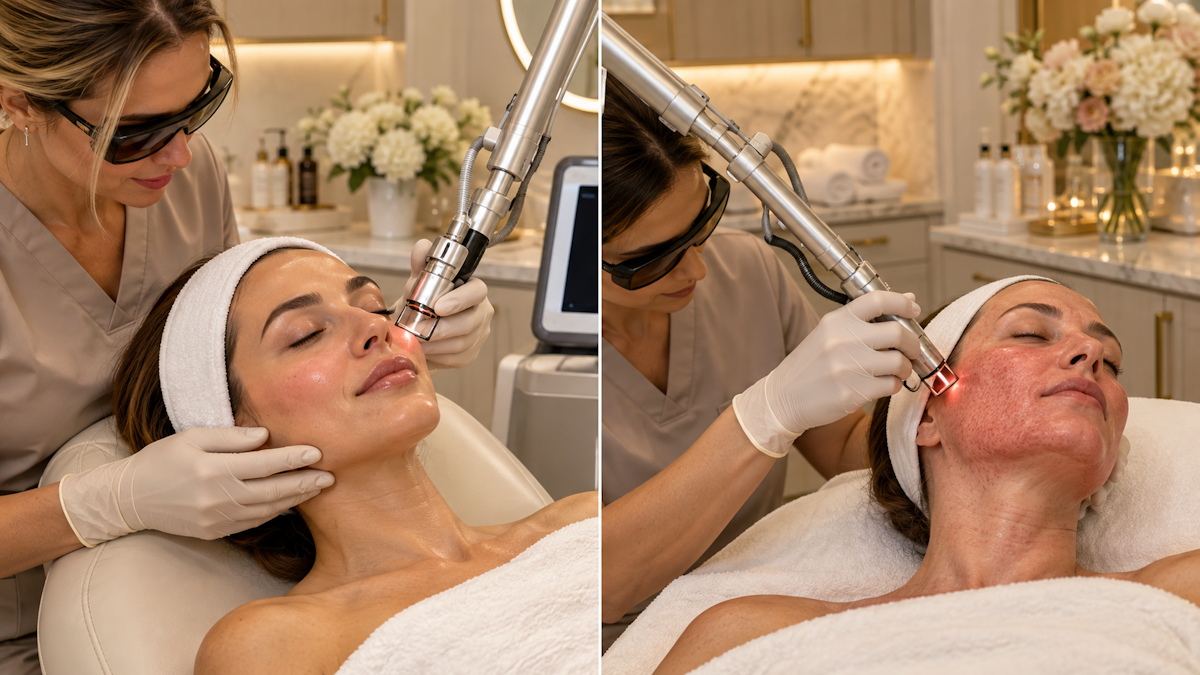
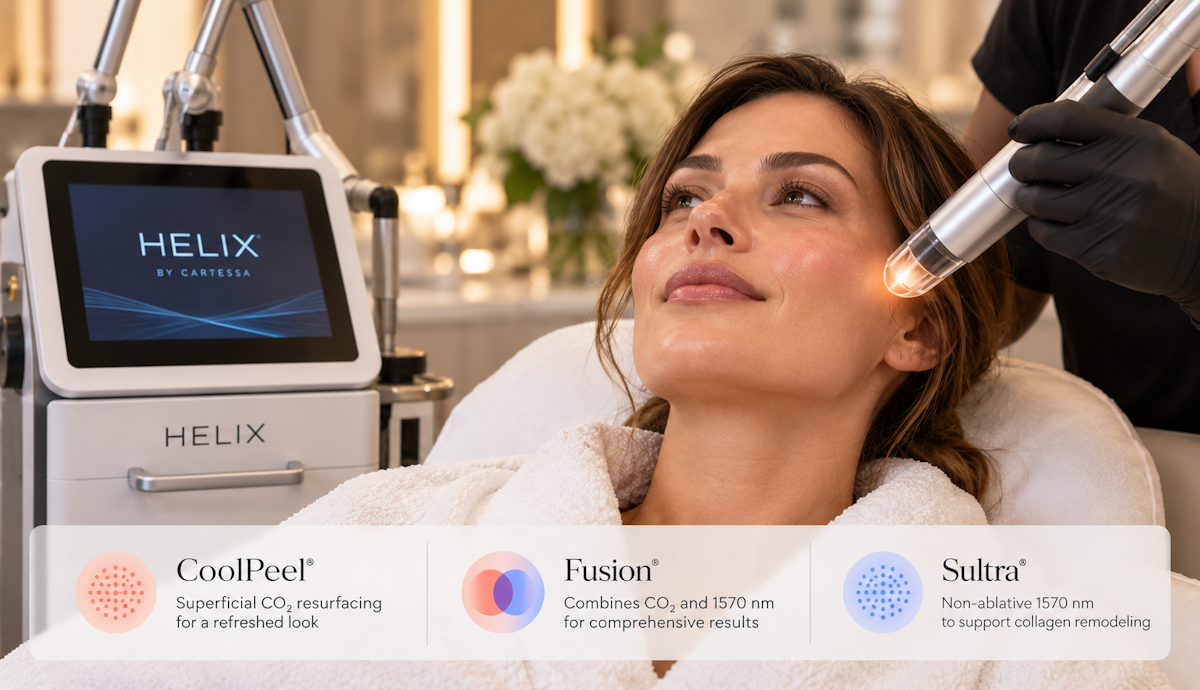
Fractional CO2 is an ablative laser, meaning it removes a thin layer of damaged skin rather than only heating it. Instead of treating the whole surface, it creates a grid of microscopic treatment zones and leaves healthy skin in between to speed healing. As those columns repair, the skin remodels collagen, which softens etched texture and depressed scar edges. At GENEVA Med, fractional CO2 laser resurfacing is performed with the HELIX by Cartessa platform, generally for more established scarring and uneven texture.
How Microneedling Creates Controlled Micro-Injuries
Microneedling uses very fine needles to create thousands of tiny channels in the skin, with no laser energy and no ablation of the surface. The American Academy of Dermatology calls it collagen induction therapy: the micro-injury signals your skin to produce more collagen and elastin, and improvement builds as that new collagen matures. It remodels from within rather than resurfacing from above.
Scar Type and Depth Matter More Than Picking the Stronger Treatment
Atrophic acne scars (depressed scars that sit below the surrounding skin) are not one condition, and the shape of your scars should drive the plan.
In a 2026 meta-analysis of randomized trials in the Journal of Cosmetic Dermatology, fractional CO2 laser produced greater acne-scar improvement and higher patient satisfaction than microneedling combined with radiofrequency, though with more pain, longer-lasting redness, and a higher rate of temporary dark marks. The takeaway is what a good provider would tell you: choose based on your skin type, your pain tolerance, and the recovery you can accept.
Boxcar Scars
Boxcar scars have fairly defined, sharp-walled edges, like small round or oval depressions. Softening those edges makes the scar catch light less harshly, so fractional CO2 is frequently a strong fit, though depth changes everything: a shallow boxcar scar is a different problem from a deep one. For the scar-by-scar breakdown, our guide to CO2 laser for acne scars and which scars respond best goes deeper.
Rolling Scars
Rolling scars create soft, wave-like dips with no sharp edge. Milder rolling scars and general post-acne unevenness often do well with a microneedling series, while more established ones may call for the deeper remodeling of fractional CO2. One thing to flag at consultation: some rolling scars are tethered by fibrous bands pulling the skin down from underneath, and when tethering is significant, neither treatment alone may fully release it.
Ice-Pick Scars
Deep, narrow ice-pick scars are the hardest category for either treatment alone, because the scar extends far below what broad resurfacing or needling reaches. They are usually addressed with a targeted or combined approach instead.
What Each Treatment Does for General Texture, Pores, and Post-Acne Unevenness
Plenty of people comparing these two treatments do not have deep scarring at all. They have rough texture, visible pores, a little post-acne shadowing, and skin that photographs unevenly in side light.
Microneedling fits that brief. It is a reasonable choice when the goal is gradual collagen stimulation, refined texture, smaller-looking pores, and overall skin quality rather than structural change to a defined scar. The AAD lists acne scars, large pores, uneven texture and tone, and fine lines among its common uses.
Fractional CO2 makes more sense when the concern includes established scar depressions, etched texture, or surface irregularity that needs real resurfacing. For something in between, there are lighter options within the laser skin resurfacing family, and our comparison of CoolPeel vs CO2 laser covers that middle ground.
CO2 Laser vs Microneedling: Intensity, Recovery, and Scar Fit Compared
| Factor | Fractional CO2 Laser | Microneedling |
|---|
| Mechanism | Ablative fractional laser resurfacing | Needle-based micro-injury |
| Primary effect | Resurfacing plus collagen remodeling | Collagen induction |
| Often suited to | Established boxcar and rolling scars | Mild rolling scars, pores, texture |
| Treatment intensity | Higher | Lower |
| Surface ablation | Yes | No |
| Visible recovery | Greater | Shorter |
| Typical plan at GENEVA Med | Around 2 to 3 sessions | Often 4 to 6 sessions |
| Skin tone considerations | Settings require individualization | Useful across a broad range of tones |
Fractional CO2 is the heavier instrument, useful when established scars justify real resurfacing. Microneedling asks less of your skin and your calendar. More aggressive does not automatically mean better; it means more treatment, which only helps when the scar needs it.
How Downtime Compares Between CO2 Laser and Microneedling
What CO2 Recovery Looks Like
Expect redness, warmth, swelling, sensitivity, and a few days of peeling as the treated zones heal. At GENEVA Med, fractional CO2 is generally planned around 3 to 7 days of visible healing per session, and depth influences where you land in that window. Our walkthrough of CO2 laser recovery, healing stages, and aftercare covers makeup timing and scheduling around events.
What Microneedling Recovery Looks Like
Microneedling is not zero downtime, but it is shorter. Redness like a moderate sunburn, mild swelling, sensitivity, and a day or two of dryness are typical, with roughly 24 to 48 hours of noticeable recovery for most people.
Why Less Downtime Is Not Automatically the Better Choice
If your scars are established, choosing the gentler treatment to save three days can mean a longer series with less change. If your texture is mild, a week of ablative healing may be more than your skin needs. Weigh downtime against what the scar actually requires.
How Skin Tone Affects the Choice Between Laser and Microneedling
Skin tone genuinely changes treatment planning. In a split-face study of patients with Fitzpatrick skin types III to V, post-inflammatory hyperpigmentation developed in 30% of patients on the CO2 laser side compared with about 7% on the microneedling side. The same study still found greater scar-grade improvement on the laser side, which is why this is a conversation rather than a rule.
Microneedling can be performed across a broad range of skin tones, but it still has to fit the scar. With ablative laser, deeper skin tones call for careful laser selection, conservative settings, diligent sun protection, and a clear aftercare plan. If pigment is already part of your concern, our skin pigmentation treatment options and our article on laser treatment for hyperpigmentation are worth reviewing.
Which Gives Better Results, CO2 Laser or Microneedling
More change per session and a better overall outcome are not the same thing. Fractional CO2 can deliver more visible remodeling in a single treatment, which is why it is chosen when established scars justify that level of resurfacing. Microneedling builds improvement cumulatively, and the AAD notes that acne scarring usually needs multiple sessions with results appearing gradually.
Set expectations around improvement, not erasure: reduced scar visibility, smoother texture, softened depressions, better skin quality. Results vary from person to person, and no plan removes acne scars completely. For the wider picture, read how energy-based laser skin treatments work and what to expect.
When Combining CO2 Laser and Microneedling Makes Sense
Most people do not have one tidy scar type. A single face can carry boxcar scars on the cheeks, rolling scars along the jawline, mild texture on the forehead, and leftover discoloration. In those mixed cases, CO2 and microneedling stop being competitors.
A sequenced plan might use fractional CO2 for structural resurfacing where scars are deepest, then microneedling later to keep refining texture elsewhere. Not everyone needs both, and spacing depends on how your skin heals, how you responded to the first treatment, and your provider's assessment rather than a universal schedule.
How GENEVA Med Chooses Between CO2 Laser and Microneedling
Treatment selection starts with looking at your skin in person, not with picking a device. That assessment covers scar type and depth, tethering, texture, whether acne is still active, skin tone and pigment risk, what you have already tried, and how much recovery your schedule allows. From there the plan may involve fractional CO2, microneedling, both in sequence, or a different acne-scar approach entirely, for patients from Alpharetta, Johns Creek, Milton, and throughout Greater Atlanta.
Find the Right Treatment for Your Acne Scar Pattern
The CO2 laser vs microneedling decision should follow your scars, your skin tone, and your real-life downtime, and that is easiest to sort out face to face. Book an acne scar consultation with GENEVA Med by calling (470) 704-9687 or contacting our team, and visit us at 3275 North Point Pkwy Suite 204, Alpharetta, GA 30005. You can also explore our acne scar treatment options before your visit.
Frequently Asked Questions About CO2 Laser vs Microneedling
Which is better for acne scars: CO2 laser or microneedling?
Neither is better for every scar. Fractional CO2 is the more intensive, ablative option and is often chosen for established boxcar and rolling scars or deeper textural change. Microneedling works through controlled micro-injury with shorter visible recovery and can suit milder rolling scars, pores, and general post-acne texture. Scar type, depth, skin tone, and acceptable downtime decide it.
Is CO2 laser more effective than microneedling?
CO2 laser is generally more intensive, and randomized trials comparing it with microneedling-based treatments have shown somewhat greater acne-scar improvement, along with more pain, longer redness, and higher pigmentation risk. Effectiveness still depends on whether that intensity matches your scars. For mild texture, the extra aggressiveness adds recovery without necessarily adding benefit.
Is microneedling better for rolling scars?
Microneedling can work well for mild rolling scars and general unevenness, where the goal is gradual collagen stimulation rather than structural resurfacing. More established rolling scars often need the deeper remodeling of fractional CO2. If the scar is tethered by fibrous bands beneath the skin, a different or combined technique may be needed to release it.
Is CO2 laser better for boxcar scars?
Boxcar scars have defined, sharp-walled edges, and softening those edges is something ablative resurfacing does well, so fractional CO2 is frequently a good fit. Depth still matters: shallow boxcar scars may respond to lighter treatment, while deep ones may need more than one approach. An in-person assessment is the only way to know which applies.
Which has less downtime, CO2 laser or microneedling?
Microneedling has less visible downtime. Expect roughly 24 to 48 hours of redness, mild swelling, and dryness. Fractional CO2 at GENEVA Med is typically planned around 3 to 7 days of visible healing per session, with redness, swelling, and peeling, and treatment depth strongly influences how long that lasts.
Which is better for darker skin tones?
There is no single answer. Microneedling can be performed across a broad range of skin tones and carries lower pigmentation risk, which one split-face study illustrated clearly in Fitzpatrick types III to V. Ablative laser can still be appropriate in deeper skin tones, but it requires conservative settings, careful laser selection, strict sun protection, and a clear aftercare plan.
Can you do CO2 laser and microneedling together?
Yes, when the scar pattern calls for it. Mixed scarring is common, and a sequenced plan may use fractional CO2 for structural resurfacing in the deepest areas and microneedling afterward to refine remaining texture. Not everyone needs both, and timing between treatments depends on healing, treatment response, and your provider's assessment rather than a fixed schedule.