By Dr. Jerath|OCT 2ND 2026
Why You See Several Treatment Names Linked to HELIX
Search for laser resurfacing and you will run into HELIX, CoolPeel, CO2 laser, Fusion, and Sultra on the same page, often with no explanation of how they relate. It reads like five separate machines. It is not.
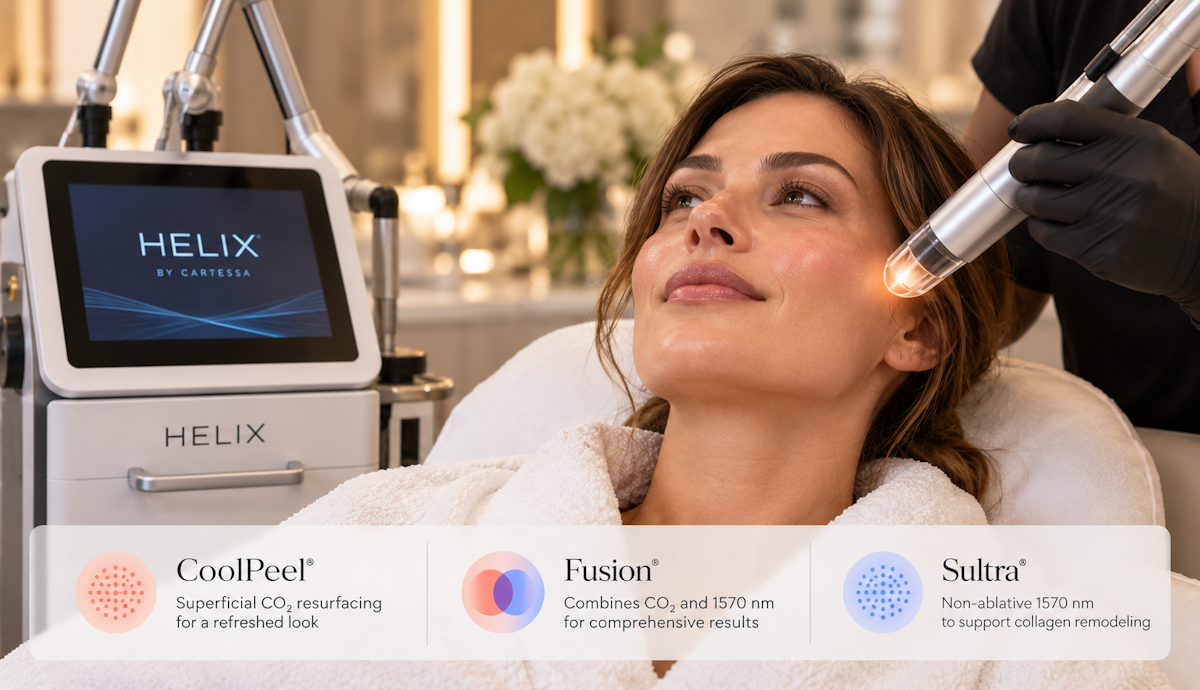
HELIX is the device. CoolPeel, Fusion, and Sultra are protocols that use the technology inside it at different depths, with different effects on the surface of your skin. So the better question is not "which laser should I get," it is "which type of energy, at what depth, with how much visible recovery, fits my concern right now." That is the one a provider can answer during a laser skin resurfacing consultation.
What Is the HELIX Laser: Ablative CO2 and Non-Ablative 1570 nm on One Platform
The HELIX laser is a fractional resurfacing platform that combines a 10,600 nm CO2 laser with a 1570 nm non-ablative fiber laser. The two can be used on their own or together, which allows one device to cover everything from a light surface refresh to deeper work beneath the skin.
The CO2 side is ablative and acts on the surface, dialed from very superficial treatment to deeper resurfacing. The 1570 nm side is non-ablative, sending heat below the surface to encourage collagen remodeling while the outer layer of skin stays intact. A 2025 review of preclinical and clinical evidence found that combining fractional CO2 with 1540/1570 nm energy improved concerns such as scars, stretch marks, skin laxity, and wrinkles, with shorter recovery than CO2 used alone. Results still vary from person to person. The HELIX platform is FDA-cleared for laser skin resurfacing.
What Ablative Means
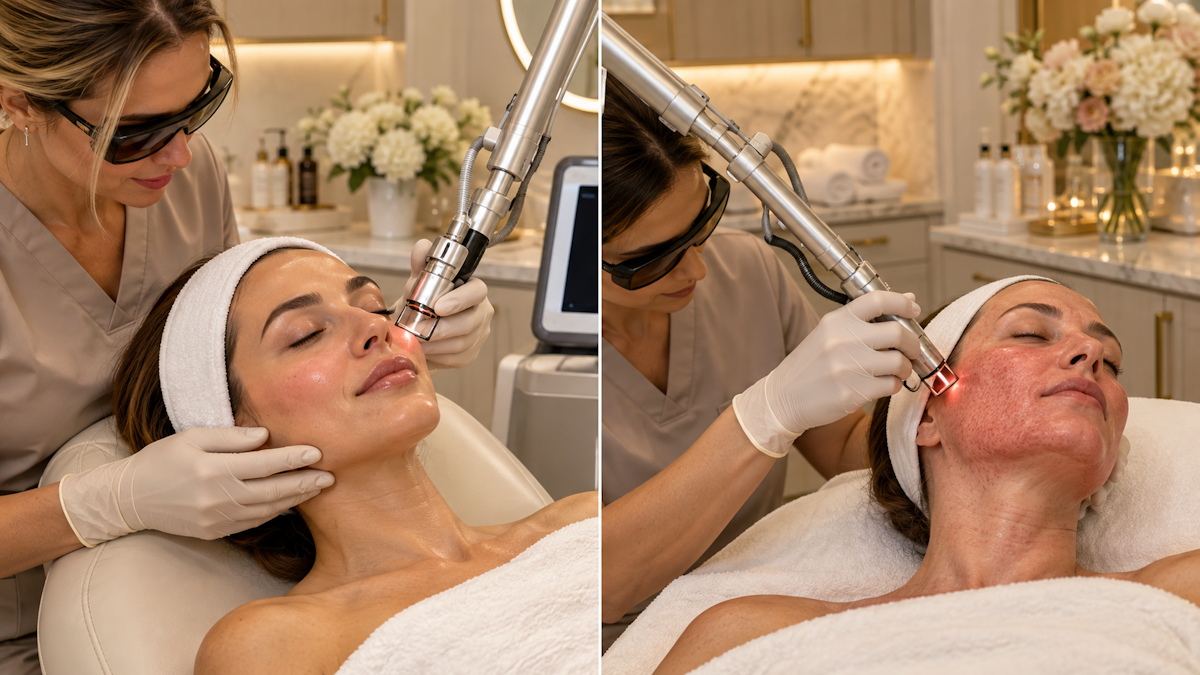
Ablative energy removes microscopic columns of skin in a controlled pattern. You trade a visible healing phase for real change in surface texture and tone.
What Non-Ablative Means
Non-ablative energy heats tissue under the skin without removing the surface layer. The skin still rebuilds, it just does it without peeling off a layer first. The change is happening underneath. For a wider view of how these categories compare, our guide to the types of laser treatments breaks it down further.
Why HELIX Uses Fractional Laser Technology
Fractional means the laser treats the skin in a pattern of tiny targeted zones rather than resurfacing every millimeter at once. Treated microscopic columns sit next to untreated skin, and that untreated skin is what helps the area recover. That gives your provider control over how aggressive a session is, lets a delicate area be treated differently than a tougher one, and keeps recovery proportional to the result you are after. The broader mechanics are covered in our pillar on how laser skin treatments work.
What Is CoolPeel
CoolPeel is fractional ablative CO2 resurfacing done superficially. It uses very short, high peak power pulses so the energy works at the surface without leaving as much unnecessary heat in surrounding tissue, which keeps downtime lighter than deeper CO2 treatment.
What CoolPeel Is Commonly Used For
Geneva Med positions CoolPeel for fine lines, enlarged pores, rough or uneven texture, uneven tone, early sun damage, and general skin quality. It is what people often choose when they want that fresh, polished look without disappearing for a week.
Why Someone Would Choose CoolPeel
Usually because recovery time is a real constraint. You want genuine resurfacing with less visible peeling and redness than deeper work, and the option to repeat it as part of an ongoing skin plan. Full details live on the CO2 laser resurfacing service page.
What Is Sultra
Sultra uses the HELIX laser's non-ablative 1570 nm wavelength. Instead of removing surface tissue, it delivers controlled heat into the deeper layers, where it supports collagen remodeling (your skin building new, better organized collagen over the following weeks).
At Geneva Med, Sultra is used for firmness, mild skin laxity, and overall skin quality while leaving the outer surface intact. Because nothing is removed from the surface, the visible reaction is typically different from an ablative treatment, though some redness and warmth are normal.
How Sultra Differs From CO2 Resurfacing
Sultra works deeper and leaves the surface in place, which suits firmness and collagen-related goals. CO2 resurfacing removes controlled microscopic areas of surface tissue, which suits texture, sun damage, lines, and scarring. They do different jobs, which is why having both on one platform is useful. If laxity is your main concern, the laser skin tightening page goes deeper on that goal.
What Is Fusion
Fusion combines the HELIX laser's ablative CO2 energy and its non-ablative energy in the same treatment strategy. The settings for each can be adjusted, so Fusion is not simply "CoolPeel plus Sultra" every time.
Why Combine Ablative and Non-Ablative Energy
Because skin concerns rarely sit at one depth. The CO2 portion addresses what you can see and feel on the surface: texture irregularities, lines, sun damage. The non-ablative portion puts heat deeper to stimulate collagen. Working at more than one level is often the thinking behind Fusion for concerns like acne scarring or mixed surface damage with some laxity. Not everyone does better with a combined approach, which is why the decision is individual.
CoolPeel vs Sultra vs Fusion: What's the Difference
The real difference is which technology is used and how deeply the skin is treated.
| Treatment |
Technology |
Surface ablation |
Primary role |
Relative recovery |
| CoolPeel |
Fractional CO2 |
Yes, superficial |
Lighter surface resurfacing |
Lower |
| Sultra |
1570 nm non-ablative |
No |
Collagen remodeling, mild laxity |
Lower |
| Fusion |
CO2 plus 1570 nm |
Yes, plus deeper thermal treatment |
Surface and deeper remodeling |
Variable |
How a Provider Decides Which HELIX Treatment to Use
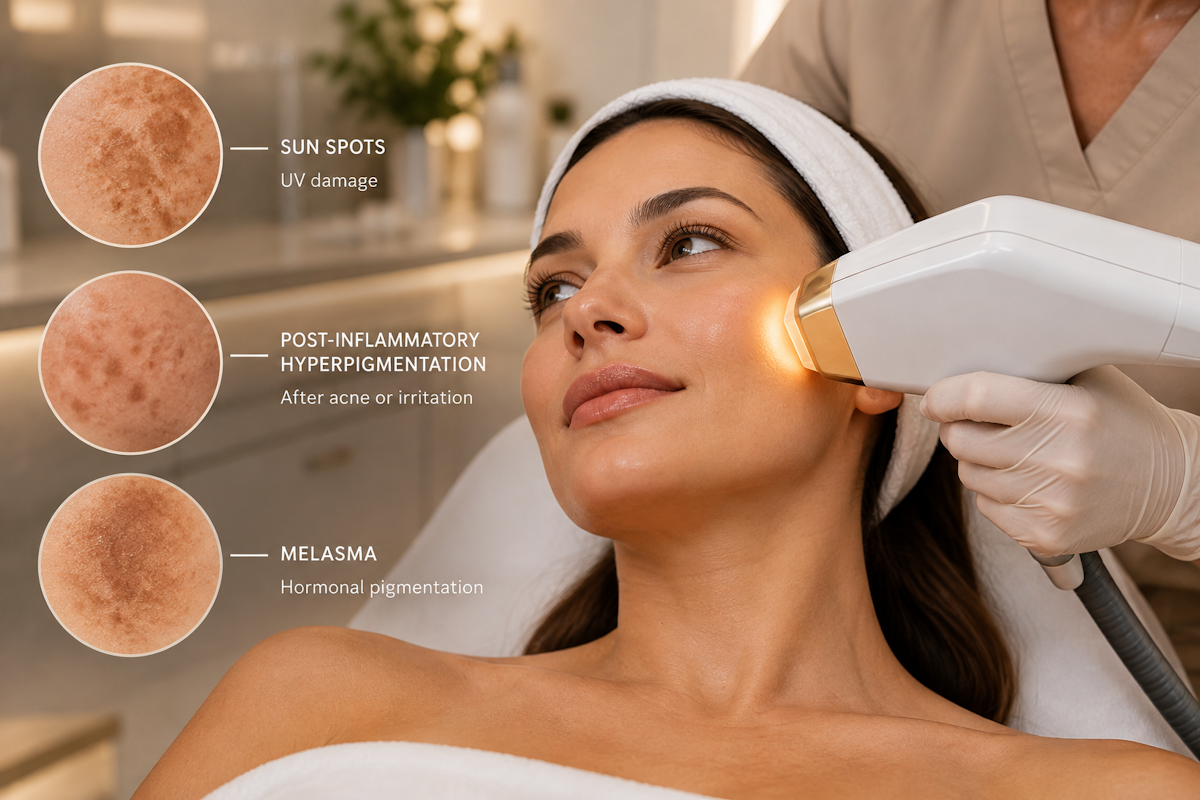
Selection comes down to your concern, your skin, your goals, and your recovery tolerance. Texture, enlarged pores, fine lines, and pigment from sun damage are surface-weighted concerns. Firmness and mild laxity sit deeper. Scarring often involves both.
Severity matters too. So do skin type and tone: ablative treatments carry a higher risk of post-inflammatory pigment changes in higher Fitzpatrick skin types, which is one reason protocol choice is individualized. Your provider will also review previous treatments, medical history, medications, and how your skin has responded in the past. And then there is life. A wedding in three weeks, a work trip, a camera-heavy month: those are legitimate inputs.
Is HELIX the Same as Traditional CO2 Laser Resurfacing
No. HELIX includes advanced fractional CO2 capability, but it also carries a separate non-ablative wavelength, so it can perform CO2-only treatment, non-ablative treatment, or a combination. Traditional CO2 devices do the first of those three. The confusion is understandable, since CoolPeel is strongly associated with CO2 and deeper CO2 resurfacing runs on the same platform.
Does HELIX Have One Standard Recovery Time
No single recovery timeline applies to every HELIX treatment, because the protocol and the settings drive what you will see. CoolPeel is designed for lighter visible recovery, Sultra involves limited surface disruption since the outer layer stays intact, and Fusion or deeper CO2 treatment depends on how intensively the skin was treated. "Minimal downtime" does not mean zero reaction for everyone. For deeper treatments, our guide to CO2 laser recovery walks through the healing stages.
Find the HELIX Treatment That Fits Your Skin Goals
Geneva Med uses the HELIX platform by Cartessa for customized laser resurfacing at its Alpharetta clinic, serving patients from Alpharetta, Johns Creek, Milton, and throughout Greater Atlanta. Every plan starts with a skin analysis, then the protocol follows: CoolPeel, Sultra, Fusion, or a staged combination over time. If you are mainly chasing fine lines and wrinkles, that shapes the plan differently than texture or firmness would.
To find out which HELIX laser approach fits your skin, book a skin consultation with Geneva Med at (470) 704-9687 or request an appointment online. We are at 3275 North Point Pkwy Suite 204, Alpharetta, GA 30005.
FAQs
What is the HELIX laser
The HELIX laser is a fractional skin resurfacing platform that combines a 10,600 nm ablative CO2 laser with a 1570 nm non-ablative fiber laser. The two technologies can be used separately or together, which lets a provider treat the surface of the skin, the deeper layers, or both. CoolPeel, Sultra, and Fusion are the treatment protocols performed with it.
Is HELIX a CO2 laser
HELIX includes fractional CO2 technology, but it is not limited to CO2. It also contains a separate non-ablative 1570 nm laser that heats tissue below the surface without removing the outer layer. That is why HELIX can perform CO2-only resurfacing, non-ablative treatment, or a combined approach, while a traditional CO2 device offers only the first option.
What is the difference between CoolPeel and HELIX
HELIX is the platform and CoolPeel is one treatment performed on it. CoolPeel is fractional ablative CO2 resurfacing delivered superficially, using short, high peak power pulses designed to limit unnecessary heat in surrounding tissue and keep recovery lighter. Saying you had a CoolPeel means you had a specific HELIX protocol, not a different machine.
Is Fusion more aggressive than CoolPeel
Not in a simple, one-size-fits-all way. Fusion combines ablative CO2 and non-ablative energy in one treatment strategy, and the settings for each can be adjusted, so intensity depends on how the treatment is configured rather than on the name alone. Fusion does reach more than one depth, which often means planning for a different recovery experience than a light CoolPeel.
Is Sultra a CO2 laser
No. Sultra uses the HELIX platform's non-ablative 1570 nm wavelength, not CO2. It delivers controlled heat beneath the surface to support collagen remodeling while leaving the outer layer of skin intact, which is why it is used for firmness, mild laxity, and overall skin quality rather than for removing surface tissue.
Which HELIX treatment has the least downtime
It depends on the settings used and how your skin responds, so there is no universal answer. CoolPeel is designed as a lighter fractional CO2 option, and Sultra leaves the surface of the skin intact, so both are generally planned around less visible recovery than deeper CO2 treatment. Your provider will match the protocol to your goals and the recovery you can accommodate.
Where to get HELIX laser treatment near Alpharetta
Geneva Med offers HELIX laser treatments including CoolPeel, Fusion, and Sultra at its Alpharetta clinic, serving patients from Alpharetta, Johns Creek, Milton, and Greater Atlanta. Treatment begins with a skin analysis so the protocol is matched to your concerns and schedule. You can learn more on our laser skin resurfacing page or call (470) 704-9687.